
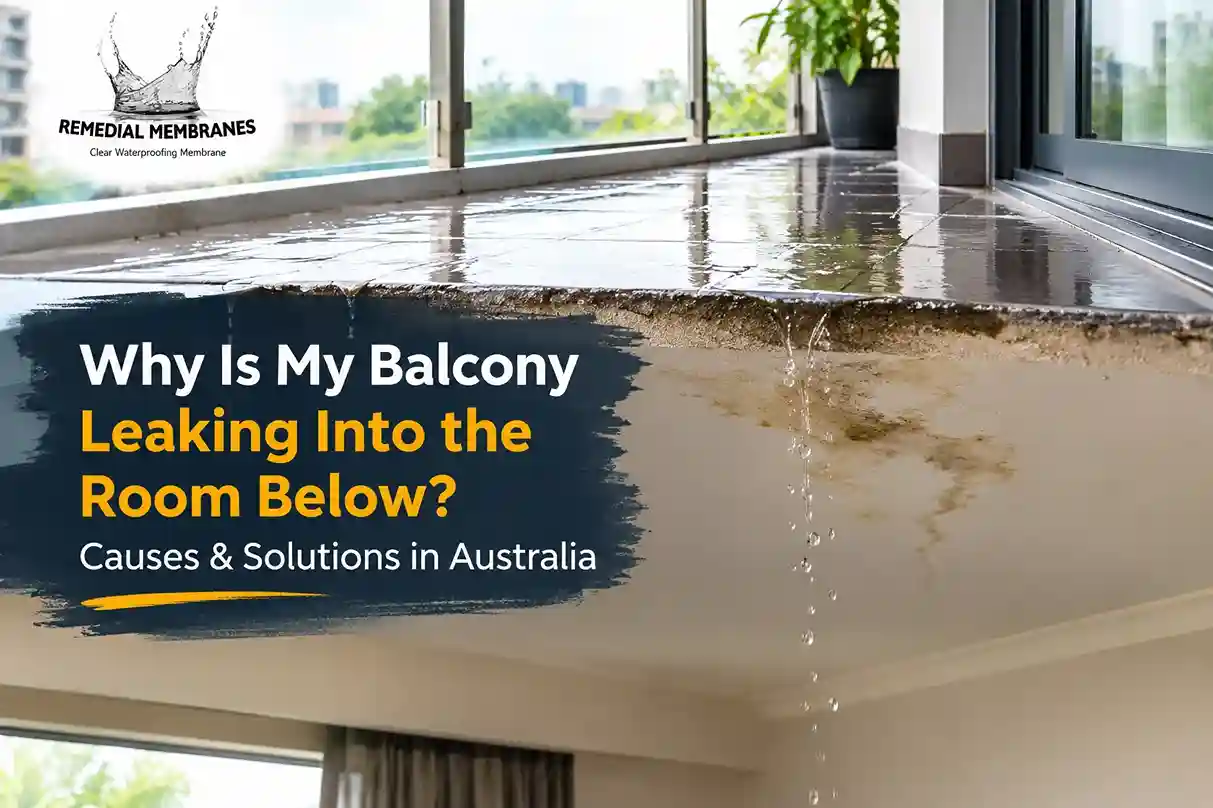
A balcony leaking into the room below can cause water stains, peeling paint, damp ceilings and damage to your property’s interior. If you notice water dripping through the ceiling after rain, moisture around light fittings, or damp patches beneath an upstairs balcony, there may be a problem with the balcony’s waterproofing system. The most common reasons a balcony leaks into the room below are a failed waterproofing membrane, cracked tiles or grout, poor drainage, damaged joints and water entering through cracks in the balcony structure. Identifying the source early can help prevent further damage and reduce the risk of expensive repairs. In Australia, balconies are regularly exposed to rain, temperature changes and harsh weather conditions. Over time, these factors can affect waterproofing materials and the integrity of balcony surfaces.
Why Is My Balcony Leaking Into the Room Below?
A balcony usually leaks into the room below when water passes through the balcony’s surface or surrounding joints and reaches areas that should remain protected by waterproofing. Although tiles may appear intact, the waterproofing membrane beneath them can deteriorate or become damaged. Water can then travel through the underlying structure and appear as a leak in the ceiling below.
Common causes include:
- Failed waterproofing membrane: Ageing, damaged or incorrectly installed membranes may allow water to penetrate the balcony structure.
- Cracked tiles and grout: Gaps in the tiled surface can allow water to reach the layers beneath, although grout itself is not the primary waterproofing barrier.
- Blocked balcony drains: Poor drainage can cause water to collect on the balcony and increase the risk of water ingress.
- Damaged joints and sealants: Deteriorated seals around doors, walls, balustrades and penetrations can create pathways for water.
- Incorrect drainage falls: A poorly designed or deteriorated surface may allow water to pool instead of flowing towards the drain.
- Structural cracks: Cracks in concrete or other building materials may allow moisture to travel through the balcony assembly.
Finding the actual source of the leak is essential. Water may travel away from the point where it enters, so the damp patch on the ceiling does not always indicate the exact location of the problem.
5 Warning Signs of a Leaking Balcony
Recognising the early signs of balcony water leakage can help you arrange an inspection before the damage becomes more extensive.
1. Water Stains on the Ceiling: Brown marks, yellow patches or damp areas on the ceiling beneath a balcony may indicate water ingress. These stains can become more noticeable after heavy rain.

2. Peeling Paint or Bubbling Plaster: Moisture trapped inside walls or ceilings can cause paint to bubble, plaster to deteriorate and decorative finishes to separate from the surface.

3. Cracked or Loose Balcony Tiles: Cracked tiles, deteriorating grout and loose tiles can indicate movement, moisture problems or installation defects. They do not automatically confirm membrane failure, but they warrant further investigation when accompanied by leaks.

4. Standing Water on the Balcony: Water that remains on the surface long after rainfall may indicate blocked drains, insufficient drainage falls or another drainage issue.

5. Damp Smells or Persistent Moisture: A musty smell inside the room below, recurring damp patches or visible mould may indicate an ongoing moisture problem that needs professional assessment.
If water is entering near electrical fittings, avoid touching the affected area and seek urgent assistance from a qualified electrician. Significant ceiling sagging or suspected structural damage also requires prompt professional assessment.
How Do You Fix a Leaking Balcony in Australia?
The correct repair depends on the cause, the balcony’s construction, the condition of the existing waterproofing and the extent of the damage.
A reliable repair process generally involves the following steps.
Step 1: Identify the Source of the Leak
A qualified waterproofing professional should inspect the balcony surface, drainage points, wall junctions, door thresholds, joints and the ceiling below.
The inspection may also involve checking moisture levels and reviewing the balcony’s construction details. Testing should be selected carefully to avoid causing further water damage.
Step 2: Assess the Existing Waterproofing
If the waterproofing membrane has failed, repairing the visible tiles alone will not necessarily resolve the problem.
The professional should determine whether the membrane can be repaired locally or whether a more extensive waterproofing replacement is required.
Step 3: Address Drainage Problems
Blocked drains should be cleared, and drainage defects should be investigated. Where necessary, the balcony’s drainage falls may need correction to help water flow towards suitable drainage outlets.
Step 4: Repair Damaged Areas
Depending on the findings, repairs may involve replacing failed sealants, treating cracks, repairing joints, reinstating waterproofing or removing sections of the existing surface.
Step 5: Verify the Repair
The completed work should be checked using appropriate methods for the specific waterproofing system. The aim is to confirm that the underlying issue has been addressed rather than simply covering the visible symptoms. For specialist assistance, explore leaky balcony repair solutions.
Can You Repair a Leaking Balcony Without Removing Tiles?
Yes, some leaking balconies may be repaired without removing existing tiles, but this depends on the condition of the tiles, the underlying membrane, the drainage system and the suitability of the proposed waterproofing solution. A compatible coating or membrane system may be suitable in certain circumstances, particularly when the existing surface is stable and the system can be correctly installed.
However, an overlay solution may not be appropriate if:
- The existing tiles are loose or extensively damaged.
- The underlying substrate has deteriorated.
- Water is trapped beneath the tiled surface.
- Drainage or falls need significant correction.
- The existing membrane has extensive damage that cannot be reliably repaired in place.
- Door thresholds, drainage outlets or other details cannot accommodate the additional system thickness.
Before choosing a solution, obtain a professional assessment of the existing balcony. The selected system must be suitable for the substrate, exposure conditions, drainage requirements and intended use. Avoid simply applying sealant over cracked grout or painting over damp surfaces. These approaches may conceal symptoms without correcting the underlying cause.
How Much Does Leaking Balcony Repair Cost in Australia?
The cost of balcony leak repair in Australia varies according to the size of the balcony, the source of the leak, access requirements and the type of repair needed.
Factors that can influence the total cost include:
- The condition and extent of the existing waterproofing membrane.
- Whether tiles must be removed and replaced.
- The amount of concrete or substrate repair required.
- Drainage corrections and replacement of damaged outlets.
- Access to the balcony and the ceiling below.
- The materials, labour and testing required to complete the work.
A small, localised repair may involve less work than a balcony requiring extensive membrane replacement and rebuilding. For this reason, it is better to obtain an inspection and an itemised quotation than to rely on a general price estimate. When comparing quotes, ask what caused the leak, which components will be repaired, what preparation is included and how the completed waterproofing will be checked.
How Can You Prevent Balcony Water Leaks?
Although no balcony is completely free from maintenance requirements, regular inspections can help identify developing problems before they become serious.
Consider these preventative measures:
- Keep balcony drains and drainage outlets clear of leaves and debris.
- Inspect grout, sealants and visible joints for deterioration.
- Look for cracked or loose tiles and signs of movement.
- Check for water pooling after rainfall.
- Inspect the ceiling and walls below the balcony for damp patches.
- Arrange professional assessments if leaks repeatedly return.
- Use waterproofing products suitable for the particular balcony system.
Avoid drilling into a waterproofed balcony or carrying out repairs that could puncture the membrane without understanding the construction beneath the surface. For buildings with recurring water ingress, a professional waterproofing assessment can help establish whether the issue is isolated or part of a broader building defect.
Why Choose Professional Balcony Waterproofing Solutions?
Balcony waterproofing requires more than sealing visible cracks. The solution must address the source of water ingress and account for the entire system, including the substrate, membrane, drainage and junctions. Professional assessment can help distinguish between surface deterioration, drainage defects and more extensive waterproofing failure. Remedial Membranes provides information and services relating to waterproofing and remedial solutions. If your balcony is leaking into the room below, you can explore the company’s leaky balcony repair service to learn more about potential repair options. The appropriate solution will depend on the property’s construction and the findings of an inspection. Where significant structural deterioration is suspected, a suitably qualified building professional or structural engineer may also be required.
Conclusion
A balcony leaking into the room below is often a sign of a waterproofing, drainage or building-envelope problem. Common causes include membrane failure, damaged joints, poor drainage and cracks in the balcony structure. The most effective repair starts with identifying the source of the water, assessing the existing waterproofing and selecting a solution appropriate for the balcony’s condition. While some balconies can be repaired without removing tiles, others require more extensive work. If you notice ceiling stains, damp patches or recurring leaks after rainfall, do not rely on cosmetic repairs alone. Remedial Membranes can help you explore suitable leaking balcony repair solutions in Australia to address waterproofing concerns and help protect your property from further moisture damage. Contact Remedial Membranes to discuss your balcony waterproofing needs and determine the most appropriate next step.
Frequently Asked Questions
Why does my balcony leak only when it rains heavily?
Heavy rainfall can expose defects that are less noticeable during light rain. Blocked drains, inadequate drainage, damaged joints or a compromised waterproofing membrane may allow water to accumulate and penetrate the balcony assembly.
Can water leak through balcony tiles?
Yes. Water can pass through gaps in grout, cracks and joints and reach the layers beneath the tiles. The waterproofing membrane should provide the primary barrier against water penetration, so damage to that membrane can contribute to leaks.
Is a leaking balcony a serious problem?
It can be. Persistent water ingress may damage ceilings, plaster, paint, building materials and internal finishes. In some circumstances, prolonged moisture exposure can contribute to corrosion or structural deterioration. Early investigation helps determine the severity.
Can I fix a leaking balcony myself?
You may be able to clear a blocked drain or undertake minor maintenance where safe. However, a leak involving the waterproofing membrane, structural cracks or recurring water ingress should be assessed by a qualified professional.
How quickly should a leaking balcony be repaired?
Arrange an inspection as soon as possible, particularly if water is entering a living area, the ceiling is sagging, or moisture is near electrical fittings. Take reasonable steps to prevent further water exposure without undertaking unsafe repairs.

One Response
I’m commenting on behalf of MEL ONE’s Canberra waterproofing team. One detail worth adding to the overlay assessment is the material already used at the joints. Your balcony installation checklist specifically notes that silicone is not compatible with this membrane and gives a separate treatment for sound existing silicone joints. For a homeowner comparing repair scopes, I’d ask the contractor to record the existing joint material and the proposed compatible treatment, rather than list only ‘reseal joints’. That also makes it clearer whether the work is a local sealant repair or a complete overlay system. This is a product-specific check, not a suggestion that every membrane uses the same detail.