
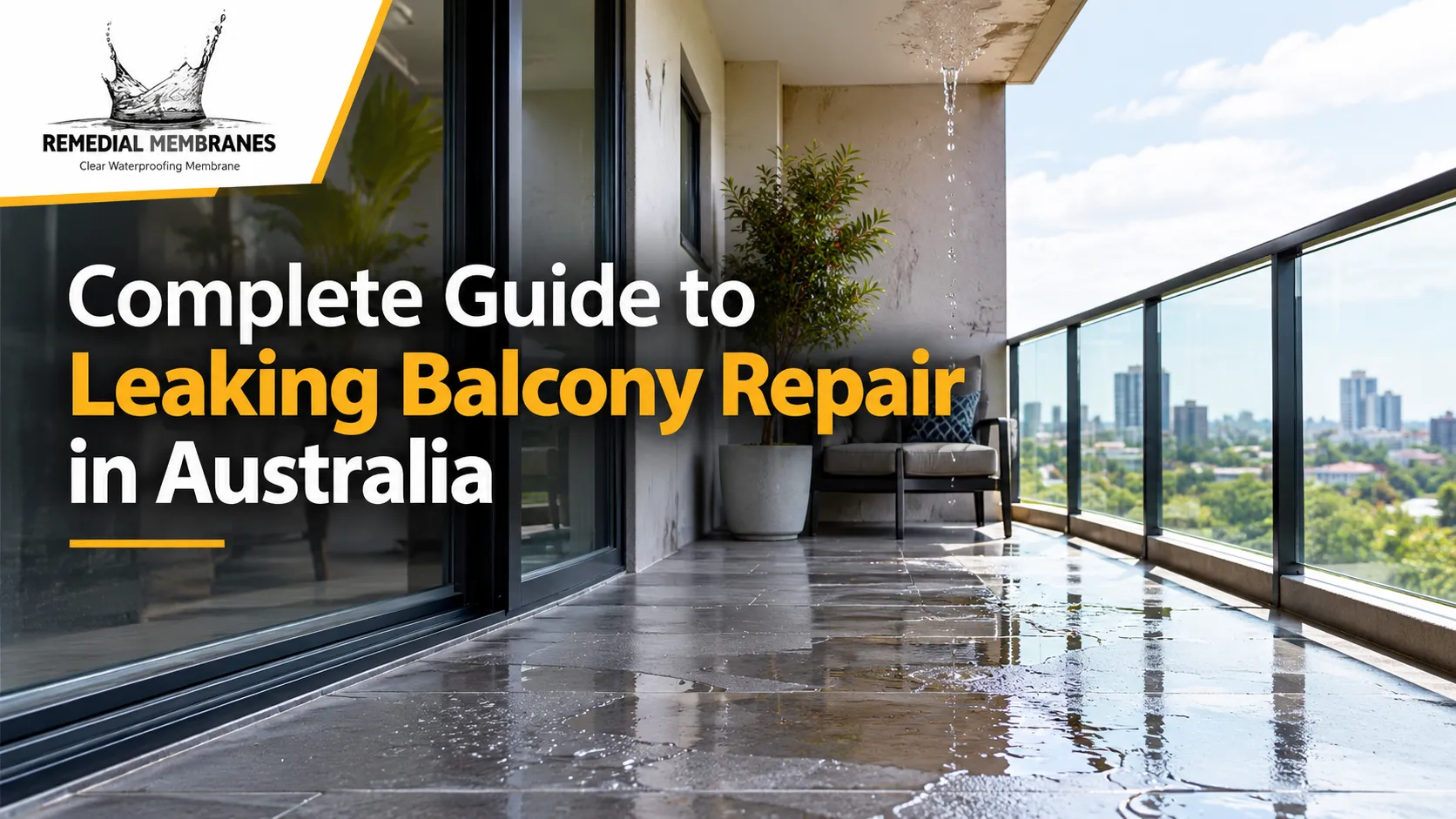
A leaking balcony can cause more than an inconvenient wet floor. If water passes through tiles, grout, waterproofing membranes or structural joints, it can damage ceilings, walls, and adjoining rooms. Understanding the cause early can help Australian homeowners prevent costly repairs and protect their property.
Leaking balcony repair in Australia starts with identifying the source of water ingress, assessing the condition of the existing waterproofing system and choosing the right repair method. Exploring suitable leaky balcony repair solutions can help homeowners understand their options, from addressing minor surface issues to repairing a failed waterproofing membrane or damaged substrate that requires professional assessment.
What Causes a Balcony to Leak?
Balcony leaks can develop for several reasons. Although damaged tiles may be visible, the underlying problem is not always limited to the tiled surface.
Common causes include:
- Failed waterproofing membrane: An aging, damaged or poorly installed membrane may allow water to penetrate the balcony structure.
- Cracked grout or sealant: Deteriorated grout and sealant can allow water to enter joints, although cracked grout alone does not necessarily mean the waterproofing system has failed.
- Poor drainage: Blocked outlets, inadequate falls or standing water can increase the risk of water penetration.
- Failed expansion joints: Movement between building elements can damage joints that should accommodate expansion and contraction.
- Cracked or loose tiles: Damaged tiles may indicate movement, moisture problems or deterioration beneath the surface.
- Incorrect installation: Inadequate detailing around door thresholds, balustrades, wall junctions or drainage outlets can create vulnerable points.
Finding the actual source of a balcony leak is essential. Sealing a visible crack without investigating the underlying issue may only provide temporary relief.
What Are the Signs of Balcony Waterproofing Failure?
Early warning signs can help you arrange an inspection before the damage becomes more extensive.
Water stains on ceilings: Brown marks, peeling paint or damp patches beneath a balcony may indicate water ingress.
- Loose or lifting tiles: Tiles that move, crack or sound hollow may point to a bonding problem, substrate movement or moisture-related damage.
- Persistent water pooling: Standing water after rainfall can indicate drainage problems or insufficient surface falls.
- Damp walls and skirting boards: Moisture around balcony doors and adjoining walls may suggest a failure in waterproofing details or another source of water entry.
- Deteriorating grout and sealant: Repeated cracking or separation around joints can indicate movement or ongoing exposure to moisture.
These symptoms do not prove that the balcony membrane has failed. Balcony waterproofing kit A qualified professional can investigate the affected areas and determine whether the problem involves drainage, joints, plumbing, surface materials or the waterproofing system.
How to Diagnose a Leaking Balcony
Accurate leak detection should come before any repair work. Water can travel through building materials, meaning the visible damp patch may be some distance from the original entry point. Start by documenting when the leak occurs. Does it appear after heavy rain, during cleaning or when water is used nearby? Note the location of water stains, cracked tiles, damaged sealant and areas where water collects. Next, inspect accessible drainage outlets and visible joints for blockages or deterioration. Avoid dismantling tiles or carrying out uncontrolled water tests, particularly on elevated balconies or where water could enter occupied rooms. A professional inspection may include checking the balcony surface, drainage, door thresholds, wall junctions, expansion joints and accessible areas beneath the balcony. Depending on the building, additional testing may be needed to identify concealed moisture or membrane damage.
The goal is to identify the source of water ingress rather than simply cover the visible symptoms.
How to Repair a Leaking Balcony
The correct balcony waterproofing repair method depends on the cause, the condition of the existing surface and the accessibility of the waterproofing system.
1. Address drainage problems
Where blocked drains or outlets contribute to water pooling, cleaning and correcting the drainage issue may be necessary. If the balcony has inadequate falls or defective drainage detailing, more extensive work may be required. Improving drainage alone will not resolve a failed membrane.
2. Repair damaged joints and sealant
Cracked sealant around suitable joints may be repairable when the surrounding materials and underlying waterproofing remain sound. The old material may need to be removed, the joint prepared, and a compatible replacement applied. Surface sealing should not be treated as a complete waterproofing solution when water is entering through a failed membrane or concealed building junction.
3. Assess the existing waterproofing membrane
If the waterproofing membrane has deteriorated, the repair may involve restoring a compatible system or replacing defective sections. The appropriate method depends on the membrane type, substrate condition, moisture levels, and manufacturer’s requirements. Where the balcony is tiled, removing the tiles may be necessary to access and properly repair the underlying waterproofing system.
4. Consider an over-tile waterproofing solution
In some situations, a suitable clear waterproofing membrane may provide an option for treating existing tiled surfaces without removing the tiles. However, this approach is not appropriate for every balcony. The tiles and grout must meet the product’s preparation and condition requirements, and the system must be suitable for the exposure, movement and drainage conditions. A clear membrane should not be assumed to correct structural movement, defective drainage, loose tiles or significant substrate damage. Always check the manufacturer’s technical instructions and confirm suitability before application.
5. Arrange professional repairs where necessary
Persistent leaks, water damage to the ceiling below, extensive tile movement and suspected membrane failure warrant a professional assessment. For apartment buildings, coordinate with the owners corporation or strata manager where the balcony or affected structure may involve common property. A suitable repair should address the identified cause, not merely conceal visible damage.
Can You Fix a Leaking Balcony Without Removing Tiles?
Yes, some leaking tiled balconies may be suitable for an over-tile repair, but the method depends on the condition of the existing surface and the source of the leak.
A clear waterproofing membrane may be considered when tiles are firmly bonded, the substrate is suitable and the product is designed for the intended application. Surface preparation, compatibility, curing conditions and drainage must all be considered. If tiles are loose, the substrate is damaged, water is trapped beneath the surface or the original waterproofing has failed extensively, an over-tile coating may not provide a reliable long-term solution. Before choosing a repair method, establish whether the issue is superficial or involves the underlying waterproofing system. This helps avoid spending money on a treatment that does not address the cause.
How Much Does Leaking Balcony Repair Cost in Australia?
The cost of balcony waterproofing repair in Australia varies according to the size of the balcony, the severity of the leak, access requirements, existing finishes and the repair method.
Factors that can influence the price include:
- The extent of membrane damage and moisture penetration.
- Whether tiles need to be removed and reinstated.
- The condition of the substrate and joints.
- Drainage improvements or structural repairs.
- The accessibility of elevated balconies.
- Inspection, testing and reinstatement requirements.
A localised repair to a suitable surface may cost less than removing tiles and rebuilding a defective waterproofing system. However, the cheapest initial option is not always the most economical over time if the underlying leak remains unresolved. Request a detailed assessment and written quote that explains the suspected cause, recommended repair method, preparation work, exclusions and any warranty conditions. Avoid relying on a fixed price without considering the balcony’s actual condition.
Australian Waterproofing Requirements and Professional Advice
Balcony waterproofing requirements depend on the building type, construction details, applicable regulations and the scope of work. In Australia, the National Construction Code (NCC), relevant Australian Standards and state or territory requirements may be applicable to particular projects. Requirements can vary with the building’s age, classification and renovation circumstances. A coating marketed for tiled surfaces should not automatically be assumed to satisfy every building compliance requirement.
For substantial repairs, apartment balconies or situations involving concealed structural damage, obtain advice from an appropriately qualified building or waterproofing professional. Where compliance is relevant, confirm the applicable requirements before work begins.
How to Prevent Future Balcony Leaks
Regular maintenance can help identify developing problems before they lead to more extensive water damage.
Use this practical checklist:
- Keep balcony drains and outlets free from leaves and debris.
- Inspect visible grout, sealant and movement joints periodically.
- Look for cracked, loose or lifting tiles.
- Monitor ceiling stains or damp patches beneath the balcony.
- Check for persistent water pooling after rainfall.
- Address damaged joints and drainage problems promptly.
- Arrange professional inspections when leaks recur or the cause is unclear.
Avoid using maintenance coatings as a substitute for repairing underlying defects. Keeping records of inspections, repairs and product information can also help property owners manage ongoing maintenance.
Conclusion
Effective leaking balcony repair starts with identifying why water is entering the building. Drainage problems, deteriorated joints, damaged tiles and waterproofing membrane failure require different solutions, so the right approach depends on the condition of the balcony. For Australian homeowners and property managers, early investigation, appropriate repair methods and ongoing maintenance can help reduce water damage and avoid unnecessary work. If your tiled balcony is leaking, explore the repair options offered by Remedial Membranes and check whether a suitable over-tile waterproofing solution may be appropriate for your situation. Always confirm product suitability before starting work.
Frequently Asked Questions
Why is my balcony leaking into the room below?
Possible causes include waterproofing membrane failure, defective drainage, damaged joints, cracks or problems around door thresholds. An inspection is needed to identify the actual source.
Can balcony waterproofing be repaired without removing tiles?
Sometimes. A compatible over-tile membrane may be suitable for certain intact tiled surfaces. Loose tiles, substrate damage and extensive membrane failure may require more invasive repairs.
Does cracked balcony grout mean the waterproofing has failed?
Not necessarily. Grout is not the same as the underlying waterproofing membrane. Cracked grout should be assessed alongside the condition of the tiles, joints, drainage and waterproofing system.
How can I tell if my balcony needs professional repair?
Recurring leaks, water stains below the balcony, loose tiles, persistent pooling or suspected membrane failure are good reasons to arrange an assessment.
What is the best way to prevent balcony leaks?
Maintain drainage, inspect joints and tiles, respond promptly to signs of moisture and ensure repairs address the underlying cause rather than only the visible damage.
